
We are happy to announce the 2027 ATF theme!
LS2F3S: The role of Livestock Systems in Safeguarding Food and Feed Security, Safety and Sustainability
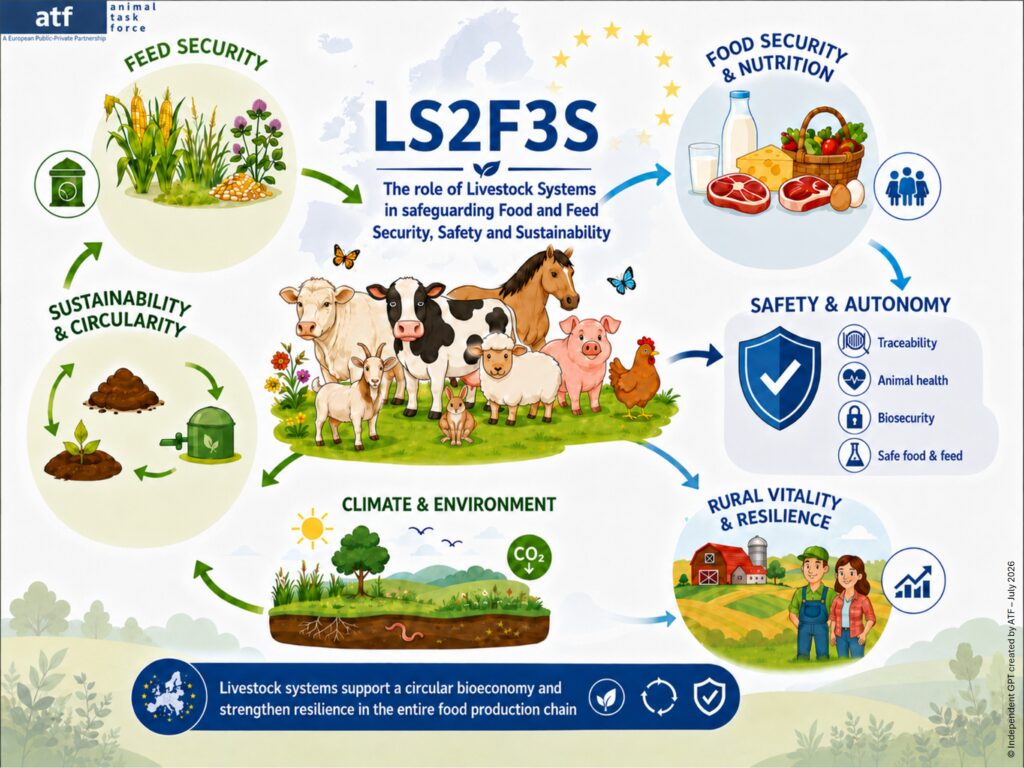
Livestock systems play a strategic role in ensuring Food and Feed Security, Safety and Sustainability (LS2F3S) within the European bioeconomy. By converting biomass that is often not directly edible by humans into high-quality nutrient-dense foods, livestock contribute to the efficiency, resilience, and circularity of food systems. In addition, livestock systems provide essential co-products such as manure, organic fertilizers, and bio-based materials, supporting soil fertility, nutrient recycling, and reducing dependence on fossil-based inputs.
Within the European policy framework, livestock production contributes to the objectives of the EU Bioeconomy Strategy, the EU Protein Plan, all of which recognize the importance of strengthening strategic autonomy, resilience, and sustainability of European food systems.
The Vision for Agriculture & Food highlights the need to ensure a competitive, resilient and future-proof agri-food sector, capable of delivering affordable and sustainable food while supporting viable farm incomes and rural vitality. Complementarily, the recently published Livestock Strategy recognizes the value of Livestock systems and emphasizes the importance of innovation, generational renewal, and balanced value chains, recognizing that farmers are central actors in ensuring food security and maintaining the vitality of rural areas. Livestock systems are an integral component of this Vision and Strategy, contributing significantly to the EU agricultural output, rural employment, and territorial cohesion. Research and innovation are recognized as key drivers to support the transition towards more sustainable livestock production systems that improve resource efficiency, animal health, and environmental performance while maintaining competitiveness.
Livestock systems contribute to food and nutrition security by providing essential nutrients such as high-quality protein and micronutrients (vitamins, minerals and trace elements). Livestock also enable the valorisation of co-products from agriculture, food processing and biofuel production, supporting circular economy approaches that reduce waste and improve resource efficiency.
Feed security remains a critical component of resilient livestock systems. The EU currently relies significantly on imported protein sources for livestock feed as indicated in the EU Protein Action Plan and is in addition highly dependent on external markets for the supply of micronutrients and amino-acids, and other feed additives, exposing supply chains to market volatility and geopolitical risks. Increasing the use of locally produced protein crops, novel feed ingredients and feed additives, and alternative biomass sources can improve resource autonomy while reducing environmental impacts associated with land-use change and transport.
Livestock systems also contribute to climate adaptation and mitigation through their role in maintaining grasslands, which represent important carbon sinks and biodiversity reservoirs. Mixed crop-livestock systems support nutrient cycling, soil health, and resilience to climate variability, contributing to sustainable land management across diverse European territories, including marginal and less-favoured areas.
Ensuring food and feed safety remains fundamental to maintaining consumer trust and protecting public health. European livestock production operates under robust regulatory frameworks covering feed safety, traceability, animal health, and biosecurity. Emerging risks related to climate change, global trade dynamics, and evolving disease patterns highlight the importance of continued research and innovation to strengthen preparedness and risk management capacities.
The LS2F3S approach recognizes livestock as an essential component of sustainable and resilient food systems, contributing to strategic autonomy, climate resilience, circular bioeconomy objectives, and rural vitality.
2 events will be organised in 2027 on that topic. Stay tuned!